Understanding your hair type
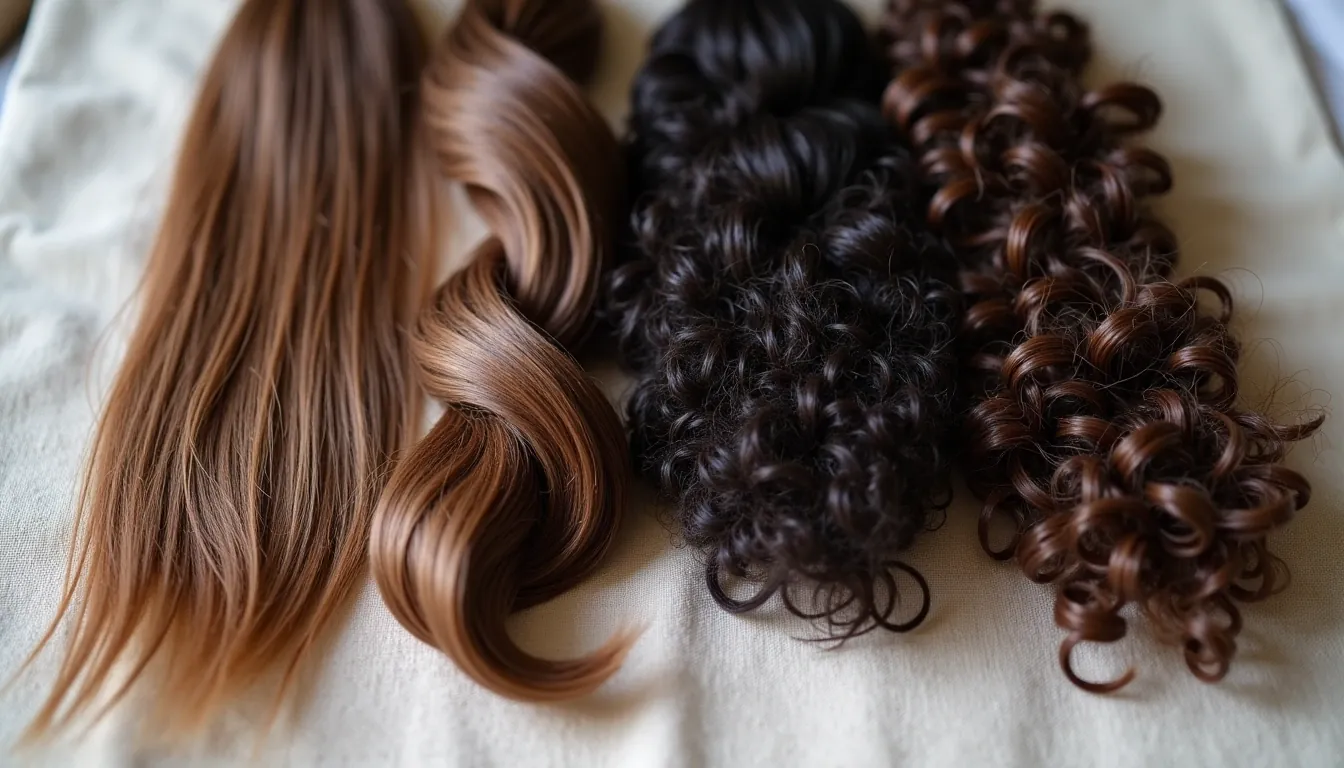
"Hair type" gets used to mean many things. It helps to split it into four separate questions, because each one changes how your hair behaves and which products suit it.
1. Texture: the shape of each strand
Texture describes the pattern hair grows in, from completely straight to tightly coiled. It is largely set by the shape of the follicle, so it is something to work with rather than fix.
- Straight hair lies flat from root to tip. Scalp oil travels down it easily, so it can look greasy faster and tends to show shine well.
- Wavy hair forms loose S-shapes. It can look straight when brushed or weighed down, and frizzy when it is dry or handled roughly.
- Curly hair forms defined loops or ringlets. Natural oils struggle to travel along the bends, so the lengths are often drier than the scalp.
- Coily hair forms tight zig-zags or coils, with a lot of shrinkage. It is usually the most fragile texture and needs the most moisture and gentle handling.
Many heads have more than one texture, for example looser waves on top and tighter curls underneath. That is normal.
2. Strand thickness: fine, medium or coarse
Take a single shed hair and roll it between your fingers. If you can barely feel it, it is fine; if it feels like a thread, it is coarse; in between is medium. Fine hair is easily weighed down by heavy creams and oils and can be damaged by high heat. Coarse hair can usually take richer products and more heat, but often takes longer to dry and style.
3. Density: how much hair you have
Density is the number of strands on your head, which is different from how thick each strand is. You can have fine hair at high density (lots of delicate strands) or coarse hair at low density. A quick check: pull your dry hair back into a ponytail. A small, thin ponytail suggests lower density; a large one suggests higher density. Density matters most for haircuts, because layers and thinning work very differently on a thin head of hair compared with a thick one.
4. Porosity: how easily hair takes on and loses moisture
The outer layer of each strand, the cuticle, is made of overlapping scales. When they lie flat, hair is low porosity: it resists water, takes a long time to get wet and dry, and products tend to sit on top. When they are raised, often after colouring, bleaching or lots of heat, hair is high porosity: it soaks up water quickly, dries fast, tangles easily and looks dull or frizzy.
The popular "float a hair in a glass of water" test is unreliable, because oil and product on the hair change the result. A better guide is how your hair behaves: does water bead on it in the shower, or does it soak in straight away? How long does it take to air dry?
Putting it together
- Fine, low-porosity hair usually does best with lightweight conditioners, little or no oil and lower heat.
- Coarse, high-porosity hair often needs richer conditioners, a leave-in and regular deep conditioning.
- Curly and coily hair almost always benefits from more moisture and less friction, whatever its thickness.
Last reviewed: November 2026